 sign in


Miscellaneous
Understanding Romanian Deadlifts: Variations That Actually Matter
RDLs look similar, but small changes in stance and load can significantly alter how your body functions. Here’s how to choose the right variation for your goal.
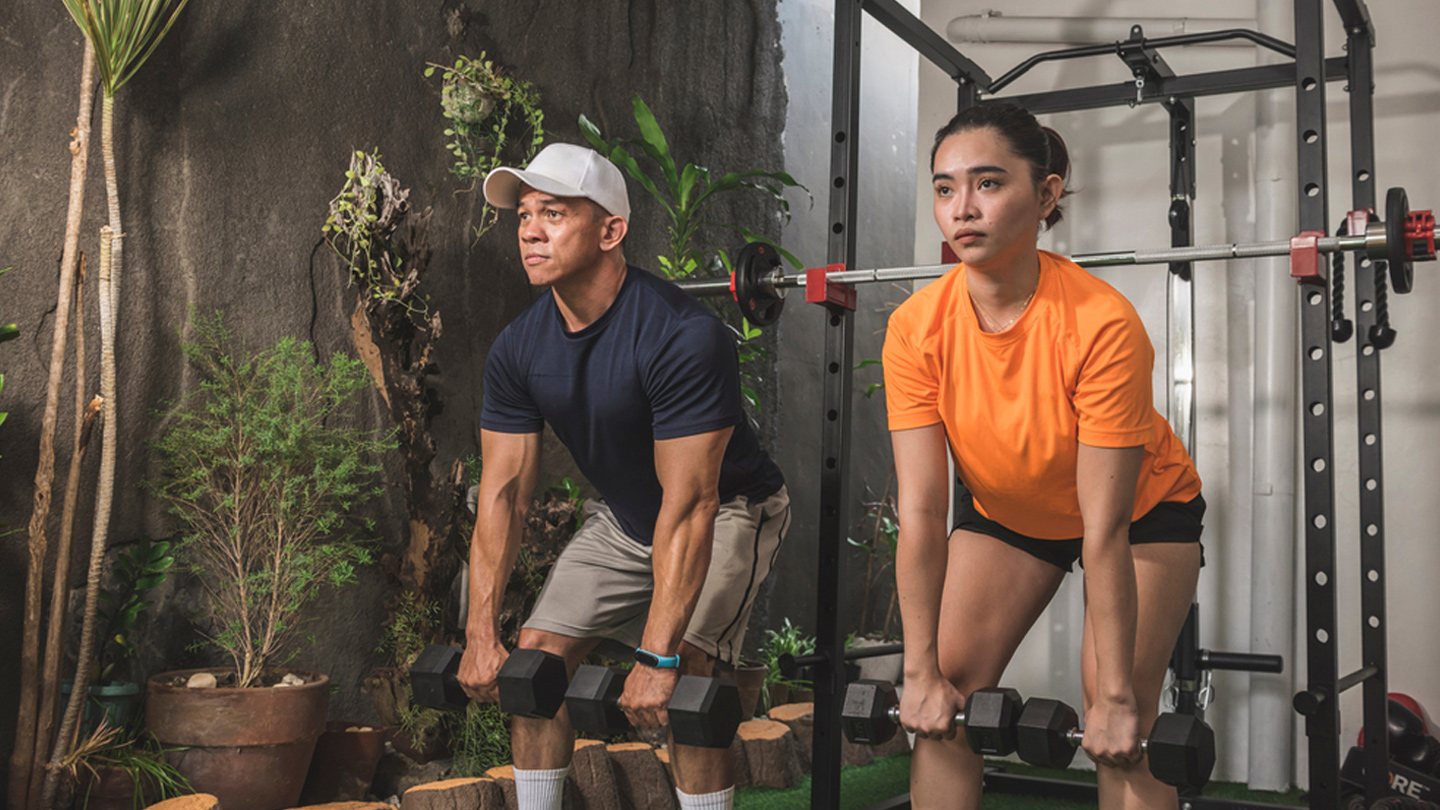
The Romanian deadlift is one of the most effective ways to train the posterior chain, but it’s also one of the most misunderstood exercises. While the movement itself remains largely the same, subtle changes in stance, load, or equipment can significantly alter muscle activation, joint stress, and training outcomes. This is why RDLs appear in so many forms. This guide breaks down the most common RDL variations, explaining what changes, what stays consistent, and when each version makes practical sense.
Related story: Common Mistakes People Make at the Gym
First, what actually makes something an RDL?
No matter the variation, a Romanian deadlift is built around one key pattern: the hip hinge. You start by standing, push your hips back, keep your spine neutral, allow a slight bend in your knees, and feel the tension build through the hamstrings as the weight lowers. You then drive the hips forward to stand back up.
Unlike conventional deadlifts, the weight doesn’t start from the floor every rep. That small difference is why RDLs place more consistent tension on the hamstrings and glutes. Once you understand that foundation, the variations start to make sense.
Related story: Should I Be Doing Cardio Before Weights? An Expert Weighs In
Barbell Romanian Deadlift: the reference point
A barbell allows you to load heavier weights and progress your strength over time in a predictable manner. Because both feet are planted and the weight is evenly distributed, it’s also easier to learn proper hip hinge mechanics here before experimenting with other versions.
Studies consistently show strong engagement of the hamstrings and glutes during barbell RDLs, particularly during the lowering phase, which is where much of the muscle-building stimulus originates (Journal of Strength & Conditioning Research, 2014). If your goal is to build strength or gain muscle, this version typically forms the backbone of your program.
Related story: Beginners' Full Body Barbell Workout
Dumbbell Romanian Deadlift: more range, more control
In dumbbell RDLs, the weights sit at your sides instead of in front of your body, many people achieve a slightly deeper hinge and feel a stronger stretch in the hamstrings. At the same time, each arm works independently, which increases stability demands.
Clinicians and coaches often use dumbbell RDLs with beginners or during deload phases because they allow more natural positioning and typically reduce spinal loading compared to heavy barbells (Sports Biomechanics, 2017).
Related story: Full-Body Dumbbells Workout With UR.Life
Single-Leg Romanian Deadlift: where control matters more than weight
Removing one foot from the ground shifts the challenge from pure strength to coordination, hip stability, and core control. The working leg must manage the load while also maintaining pelvic stability.
Research on unilateral training has shown that exercises like single-leg RDLs improve neuromuscular control and help correct side-to-side imbalances, which is why they’re common in rehabilitation and injury-prevention programs (European Journal of Applied Physiology, 2010).
Related story: Five Ways in Which Strength Training Boosts Your Health

B-Stance (Kickstand) RDL: the middle ground
One foot stays slightly behind you for support, while the front leg does most of the work. This setup reduces balance stress while still biasing one side more than the other. From a programming standpoint, B-stance RDLs are useful when addressing strength asymmetries without sacrificing load progression (International Journal of Sports Physical Therapy, 2019).
Trap Bar Romanian Deadlift: easier on the back, still effective
Using a trap bar alters the position of the load in relation to your body. Because your hands are at your sides and the weight stays closer to your centre of mass, trap bar RDLs generally reduce shear forces on the lower back. This makes them appealing for people with back sensitivity or athletes managing high training volumes.
Biomechanical comparisons show trap bar variations alter joint loading without reducing posterior-chain activation (Journal of Strength & Conditioning Research, 2011).
Snatch-Grip Romanian Deadlift: when range increases
A snatch grip increases the range of motion and demands more from the upper back and lats to keep the spine stable. That’s why this variation often shows up in Olympic-lifting preparation. Research indicates wider grips increase posterior-chain and upper-back demands due to longer moment arms (Sports Biomechanics, 2015).
Related story: 5 Mobility Exercises to Improve Upper Back Pain
Split-Stance Romanian Deadlift: closer to real life
In a split stance, the body assumes a slightly asymmetrical position, similar to walking, running, or climbing stairs. This variation challenges hip control while keeping both feet firmly grounded, making it useful for athletes and those with general fitness goals alike. Split positions increase stabiliser demand without compromising force production.
Band-Resisted Romanian Deadlift: changing how tension feels
Adding bands doesn’t change the movement; it changes where the exercise feels hardest. Bands increase resistance as you stand up, reinforcing strong hip extension and glute engagement at the top. This is often used to improve technique or re-teach proper hip drive. Research shows elastic resistance can alter force output patterns and enhance neuromuscular engagement (Journal of Strength & Conditioning Research, 2008).
Related story: 8 Resistance Band Exercises For Better Definition
So, which RDL should you choose?
Instead of asking which variation is best, ask what you need right now.
- Building strength? Barbell or trap bar
- Fixing imbalances? Single-leg or B-stance
- Reducing back strain? Dumbbell or trap bar
- Improving control? Split-stance or band-resisted
At its core, the movement stays the same. What changes is where your body feels the work most.
Related story: Gym Start-up Manual: 5 Fitness Terms You Should Know
Romanian deadlifts don’t need to be complicated to be effective. The movement itself is simple, but the way you apply it can make a significant difference. When you understand why different RDL variations exist, your training becomes more intentional and effective. You stop repeating exercises out of habit and start choosing them with purpose. That small shift, knowing what you’re asking your body to do and why, is often what separates progress from plateaus.
Related story: 5 Reasons To Start Lifting Weights If You Work The 9 To 6 Shift
Make movement part of your everyday life. Join our home workout and take that first step toward feeling stronger.
EXPLORE MORE
Every January, health resolutions surge by week three, and most disappear. For organisations, this drop-off exposes what’s broken in preventive healthcare and behavioural engagement systems.

From sculpted skin to better circulation, gua sha has become the face of modern lymphatic wellness. Here’s what actually works, why it matters, and what science really says.

From science-backed skincare to joy-led movement and mindful indulgence, 2026 is about doing less, but doing it better.
.jpg)
Winter doesn’t lower immunity by default; disrupted routines, indoor living, and chronic stress do. Here’s how families can protect their immune health with habits that work quietly but consistently all season.
